
Industrial and manufacturing leaders often need to deliver dependable service under tight cost, timing, and capacity constraints. The most technically advanced option is not always the option that best fits the customer’s actual situation.
This problem persists when organizations design around their preferred process rather than the customer’s operating reality. Misaligned service models can add cost, create weak handoffs, and make a practical alternative difficult for buyers to recognize.
Kaleigh Peat, Manager of ACC Medlink, developed her perspective by working across vehicle cleaning, maintenance, marketing, finance, human resources, accounting, and sales. That progression gave her firsthand exposure to the operational details behind patient transport.
The sections below break down how air critical care demonstrates fit-for-purpose service design, whole-system learning, responsible AI use, and the way practical expertise can support stronger business relationships.
Air Critical Care Shows Why Service Design Starts With the Real Constraint
Air Critical Care began as an air ambulance business in 2010, then identified a gap for families whose relatives needed to remain bedbound but could not afford air transport. A ground-based option addressed that need without assuming every transport required the highest-cost service model.
Start with the customer’s non-negotiable need
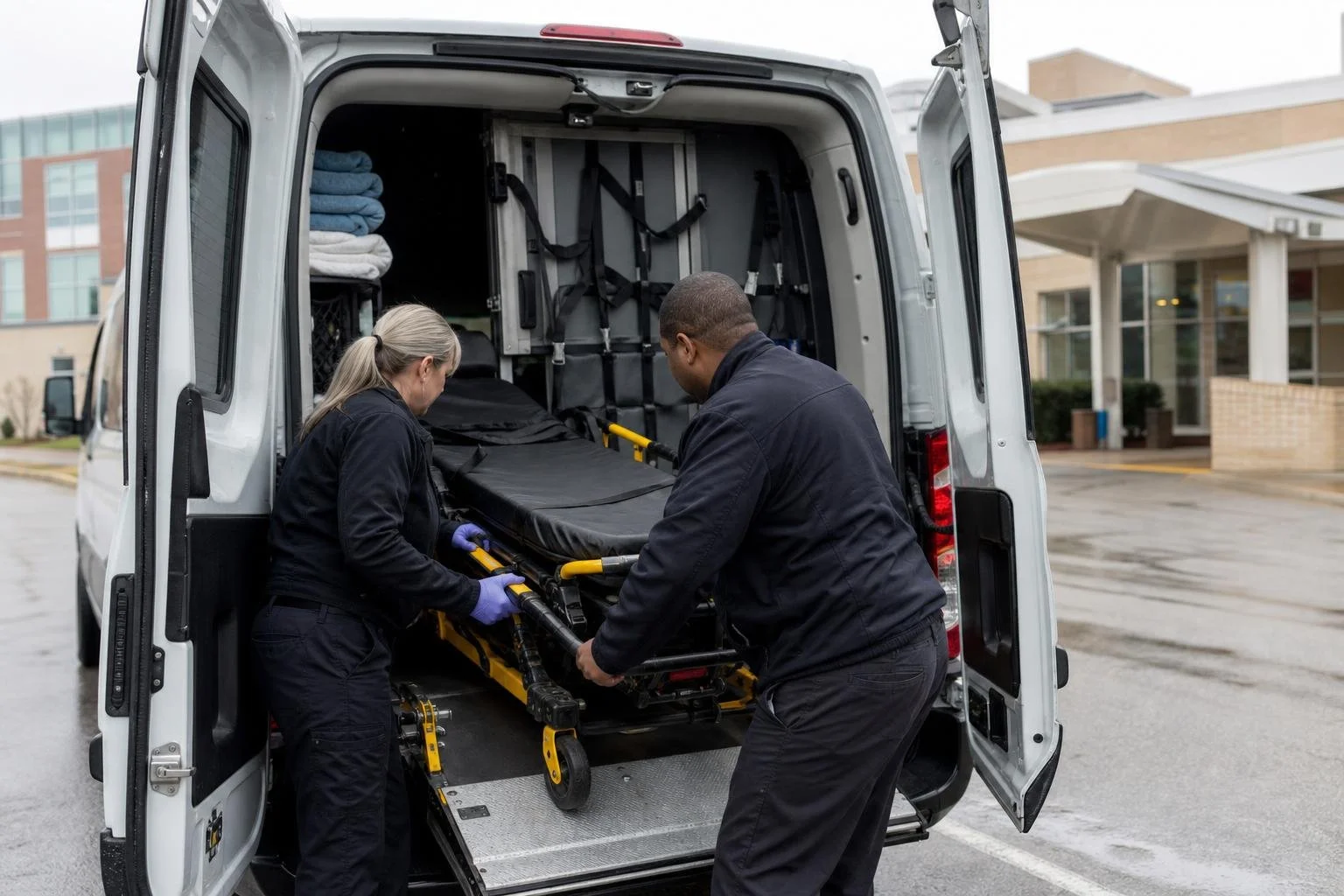
The company’s early response involved a Ford van, a nurse, and a long ground trip for a family that could not afford a $30,000 air ambulance transport. The goal was not to duplicate air service. It was to help move a bedbound person safely closer to family.
Separate essential care from unnecessary cost
Most of the company’s transports are now ground-based because that option is more affordable, while air ambulance service remains available for more critical patients. Technical buyers face a similar decision when selecting capability: match the level of service to the actual requirement rather than defaulting to the most elaborate option.
Make the alternative easy to understand
A practical service has limited value if the people making referrals do not know it exists. Hospitals, case managers, social workers, and home health companies can help families understand when ground transport may be an appropriate option.
Identify the customer’s actual operating constraint.
Define the capabilities essential to a safe outcome.
Match the delivery method to the level of need.
Explain the option to the people influencing the decision.
For an industrial supplier, this checklist can prevent a familiar mistake: proposing a technically impressive solution that does not fit the customer’s budget, process, or urgency. A useful offer removes the right constraint without adding unnecessary complexity.
Reliable service starts with accurate problem definition. Once the real need is clear, equipment, staffing, cost, and communication can align around an outcome the customer can trust.
Build Operational Judgment by Learning the Whole System
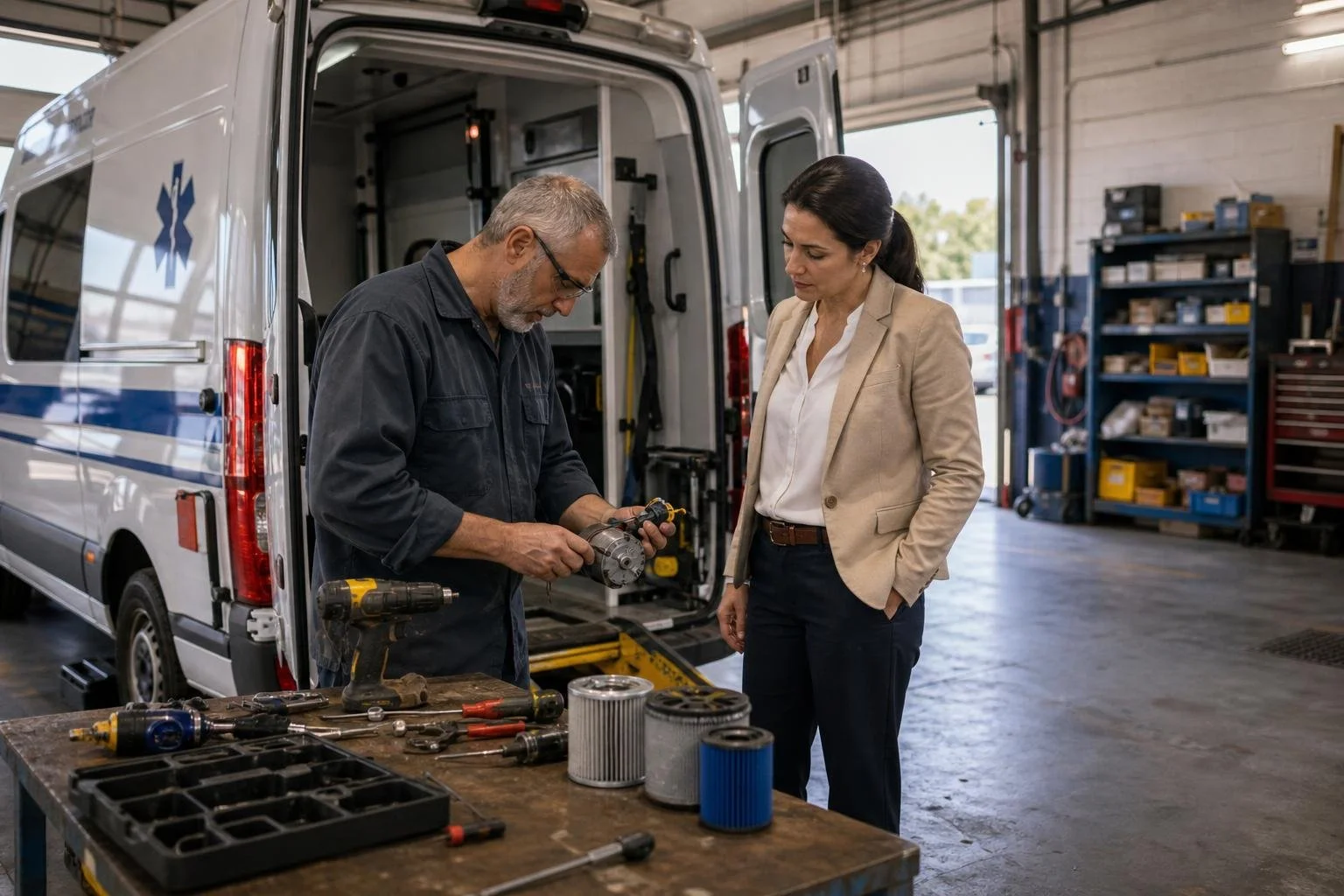
Peat’s path to leadership began with frontline work rather than a formal executive role. She cleaned offices, restocked vans, worked in the mechanic shop, and later took on marketing, financial work, human resources, accounting, and sales.
Learn where the work happens
This progression exposed the details that determine whether a service works in practice. Vehicle readiness, staffing, customer communication, and financial decisions are connected, and leaders who understand those links can identify friction before it reaches the customer.
Use cross-functional exposure to improve decisions
Industrial organizations encounter the same pattern. A sales commitment can affect production scheduling, a design choice can change maintenance demands, and a purchasing decision can influence field reliability. Cross-functional knowledge makes those tradeoffs easier to see earlier.
Continue developing after the job changes
Pete described taking two or three classes each year in subjects such as personal development, leadership, and sales. She also pointed to mentoring and leadership training as helpful in becoming more comfortable speaking, influencing others, and adapting to different personalities.
Observe frontline work directly.
Spend time in functions that affect delivery.
Document lessons from maintenance, sales, and handoffs.
Pair emerging leaders with experienced mentors.
Continue structured learning after promotion.
The purpose is not to have every leader perform every job indefinitely. Practical exposure helps leaders ask better questions, recognize dependencies, and coach teams in ways that reflect the work they actually do.
Operational judgment grows when experience, education, and mentoring reinforce one another. For companies managing complex products, that combination can support more consistent execution and stronger customer confidence.
Use AI to Improve Routing Without Losing Human Accountability
Air Critical Care uses AI to support coordination rather than to create a spectacle. The company moved from handwritten cards showing vehicle assignments and destinations to tools that help assign transports based on location and route compatibility.

Automate repetitive coordination first
One example is matching a new transport with a vehicle already finishing in a compatible area. If a vehicle is ending in Maryland, the system can place another Maryland job beneath it, reducing the manual effort required to sort assignments.
Keep people responsible for judgment
Digital support does not remove the need for people to manage vehicles, crews, patient needs, and customer communication. The company also uses digital tools for receipts and vehicle inspections, while its teams remain responsible for delivering the service.
Build tools around operating knowledge
Routing logic depends on knowledge developed through the work itself. Vehicle readiness, crew availability, and transport requirements still require people who understand the operation. A system can organize information, but sound rules and exceptions must be defined by the organization.
Choose a repetitive coordination problem.
Define the rules experienced employees already use.
Test recommendations against actual conditions.
Keep human review for exceptions.
Check whether the tool makes work clearer.
This gives industrial leaders a practical starting point for AI adoption. Rather than asking whether a tool can replace a department, identify a recurring handoff that consumes time, creates errors, or obscures useful information.
The most credible use of technology is visible in day-to-day work. It reduces administrative friction while leaving people accountable for quality, exceptions, and problem solving.
Turn Practical Expertise Into Authority and Better Business Conversations
A capable operation still needs a clear path to the people who can use it. Air Critical Care seeks greater awareness among hospitals, facilities, case managers, social workers, and home health companies that ground transport may be an option for some bedbound patients.

Lead with the problem customers recognize
Useful authority starts with a difficult decision the audience already faces: what level of transport is needed, what support is required, and what the family can manage. This approach presents expertise as practical guidance rather than promotion.
Make relationships useful after the first exchange
Guest, referral, and supplier relationships become more valuable when they lead to continued learning. A strong discussion can reveal a customer concern, a process gap, or an example worth following up on instead of leaving the insight behind after publication.
Connect operational lessons to the industrial audience
Industrial and manufacturing decision-makers can turn verified operational lessons into articles, short-form distribution, sales enablement, and conversations with channel partners. For complex products and reliability-sensitive operations, content earns attention when it helps buyers understand a real process problem and identify the next question to ask.
Name the operational problem in the audience’s language.
Share one verified lesson from actual work.
Explain where the lesson applies and where it does not.
Give buyers or partners a clear next conversation.
This framework keeps publishing connected to the business rather than treating it as an isolated marketing task. It also protects trust by making the boundaries of a solution clear and avoiding exaggerated claims.
Practical expertise compounds when it is explained clearly, shared consistently, and followed by useful relationship-building. That is how a strong discussion can support authority, trust, and better opportunities without becoming a sales pitch.
Conclusion
Air critical care provides a broader lesson for organizations working under cost, capacity, and reliability pressure. Durable value comes from designing service around the real need rather than around a default offering.
First, practical service design begins with the customer’s constraint. The most appropriate solution may not be the most expensive or technically elaborate one.
Second, leaders build stronger judgment by understanding work across functions. Frontline exposure, continued learning, and mentoring connect daily execution to better operational decisions.
Third, AI is most useful when it improves a defined process while people remain responsible for quality and exceptions. Better coordination should make accountability clearer, not less visible.
Industrial and manufacturing leaders can apply these lessons by selecting one costly handoff, examining it at the point of use, and sharing the resulting improvement with the customers and partners it affects.
FAQs
What does air critical care mean in this context?
It refers to Air Critical Care’s patient transport services, which are primarily ground-based and also include air ambulance transport for more critical patients.
What is the main operational lesson from Air Critical Care?
Start with the customer’s actual need, then select the most appropriate service model instead of defaulting to the highest-cost option.
How can industrial companies apply whole-system learning?
Leaders can observe frontline work and learn how sales, maintenance, purchasing, staffing, and delivery decisions affect one another.
How is AI used in the company described here?
AI helps assign transports to vehicles based on location, while digital tools also support receipts and vehicle inspections.
How can practical expertise build business authority?
Organizations can share verified operating lessons, follow up with relevant partners, and connect each insight to a real customer problem or next step.