
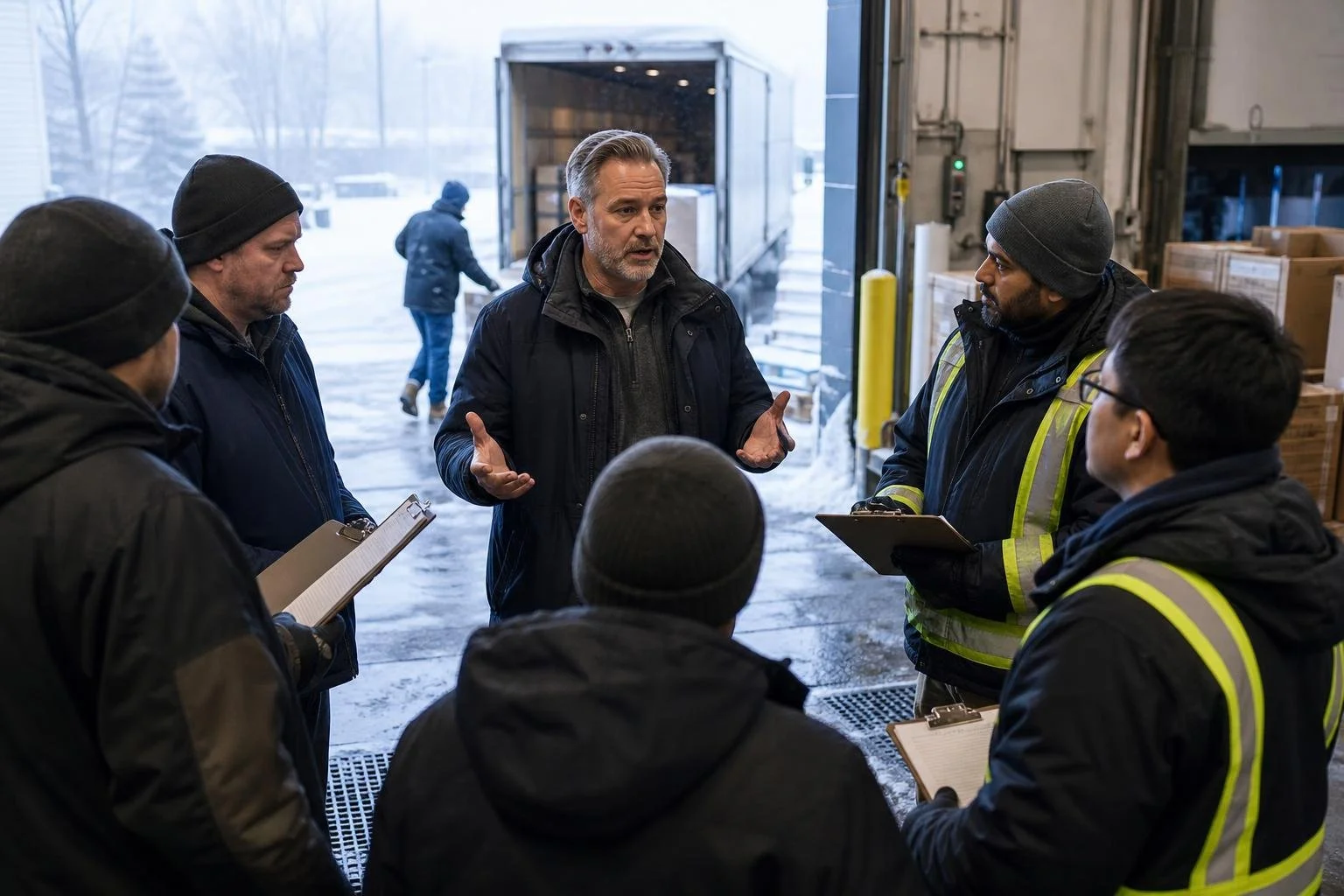
Industrial operations do not break down only because machines fail or schedules shift. They also break down when newly promoted leaders are left to handle conflict, safety, quality, and trust without a clear operating standard.
This problem continues because promotion often rewards technical performance or work ethic, while the new role suddenly requires influence, judgment, and communication under pressure. For manufacturers and industrial suppliers, these leadership principles can apply to missed handoffs, inconsistent behavior, and strained frontline relationships.
Noel Massie built a 40-plus-year career at UPS, beginning as a part-time employee at 19 and later serving as Vice President of U.S. Delivery Operations. His book, Congrats! You've Been Promoted, focuses on value-based leadership and practical frontline techniques for newly promoted supervisors.
The sections below break down how early leadership development, operational complexity, mentorship, and professional conduct help leaders protect reliability and earn trust.
What Noel Massie's UPS Career Shows About Early Leadership
A first promotion can feel like recognition, but it also changes the job immediately. The useful lesson from Noel Massie is that a new title must be supported by standards, practice, and values that can hold up when people test them.

Promotion creates a different job overnight
The work that earns a promotion is often not the work required after it. A strong operator, technician, driver, planner, or engineer may suddenly need to set expectations, handle resistance, and make decisions that affect other people’s performance.
That shift is especially sharp on the frontline, where supervisors are closest to safety, throughput, quality, and customer commitments. Without preparation, the newly promoted leader can mistake authority for influence.
Values have to become operating rules
His leadership foundation centered on integrity, ethics, fairness, trust, values, and listening. Those ideas only matter when they guide decisions in real conditions, not when they sit as general statements on a wall.
One repeated operating standard from his UPS experience was simple: "If it's not right, we're not doing it." For industrial leaders, that kind of clarity helps teams know what will not be sacrificed when pressure rises.
Influence is learned before pressure arrives
Early in his leadership career, role play helped prepare him for a tense dock-floor conflict with an experienced driver. Because the scenario had been practiced, the response stayed calm and the outcome did not become a public contest.
That point matters for any environment where experienced employees know the operation deeply. New supervisors need methods for listening, setting boundaries, and keeping the work moving without turning disagreement into humiliation.
Define non-negotiable standards before conflict starts.
Practice difficult discussions before a shift goes live.
Separate personal confidence from positional authority.
Use fairness and safety as decision filters.
Coach new leaders during their first months.
This checklist gives managers a practical way to treat promotion as a development process. It also makes expectations visible before the first major confrontation, rush order, customer escalation, or safety concern.
Early leadership succeeds when new supervisors learn how to influence people before the operation forces them to improvise.
Why Operational Complexity Makes Leadership a Reliability Issue
Reliability depends on far more than the visible final step. Complex operations rely on planning, technology, physical movement, frontline judgment, and leaders who can keep people aligned when conditions change.

The visible delivery is only the final step
The UPS example shows an operation that includes more than drivers, trucks, and supervisors. It also includes technology, engineering, coding, robotics, labs, and the physical realities of moving goods through a large network.
That is a useful lens for manufacturers and technical suppliers. Customers may see only the finished shipment, installed component, or service visit, while the reliability they judge is built through many hidden decisions.
Disruptions test judgment, not slogans
Road construction, traffic, floods, storms, and emergency plans were part of daily operational thinking in large delivery operations. Under those conditions, teams need leaders who can prioritize people, standards, and execution without adding confusion.
Technology can improve efficiency, but it does not remove the need for human observation and leadership. Someone still has to read conditions, assess risk, communicate clearly, and decide what the team will and will not do.
For manufacturers, culture is executed at the bottom
For plants, distributors, equipment makers, and service organizations, culture becomes real where the work is performed. A quality or safety message from the top only works if supervisors apply it consistently on the floor, dock, route, or jobsite.
This is a business issue for industrial buyers and channel partners. Operational reliability is easier to trust when a supplier’s frontline leaders behave consistently under pressure.
Unclear handoffs between shifts or departments.
Rushed decisions that bypass safety standards.
Silent workarounds that hide process problems.
Mixed messages from supervisors and managers.
Customer commitments made without operational alignment.
These risks rarely look dramatic at first. They grow when teams believe speed matters more than standards, or when leaders fail to correct small gaps before they become operational habits.
Reliable execution is built by leaders who translate strategy into daily conduct where customer impact begins.
How Training and Mentorship Turn Promotion Into Capability
Training is often treated as an event, but new leadership capability is built through repetition and feedback. A promotion without coaching leaves the new leader to learn from employees, customers, and live operational pressure.

Role play prepares leaders for conflict
Role play can feel simple, but it gives supervisors a safe place to rehearse difficult moments. It prepares them to respond with structure when an employee refuses a request, challenges fairness, or raises a legitimate concern.
For industrial teams, this kind of practice is not soft. It protects throughput, safety, and morale by giving leaders words and methods before the stakes are high.
Mentors transfer standards through behavior
Strong mentorship can shape leadership habits early. Managers who model fairness, ethics, respect, and development give new supervisors a pattern to carry into larger responsibilities.
A mentor helps a new leader understand how standards look in real situations. That guidance is especially valuable when the new supervisor is leading former peers or employees with far more field experience.
Confidence grows from a development plan
New leaders often question whether they are ready. Confidence improves when the organization gives them a plan, regular coaching, and a place to review mistakes honestly.
The first six months to a year matter because newly promoted leaders need a clear plan for training and development. If the organization waits until performance problems appear, it has already allowed avoidable patterns to settle in.
Assign an informal mentor the new leader respects.
Schedule coaching during the first months after promotion.
Rehearse conflict, safety, and performance discussions.
Review real decisions after difficult shifts or events.
Connect values to observable supervisor behaviors.
These practices do not require a complicated program to be useful. They require consistency, manager attention, and a belief that frontline leadership is too important to leave to chance.
Promotion becomes capability when organizations teach leaders how to act before authority is tested.
Professional Conduct in a Faster, More Visible Workplace
Speed, visibility, and constant communication have raised the cost of careless leadership behavior. A supervisor’s tone, public conduct, and emotional control can affect trust as much as technical knowledge does.
Leaders are evaluated in ordinary moments
Leaders are evaluated even when they think the moment is casual. Employees notice how supervisors speak, react, and behave when conditions are routine, stressful, public, or inconvenient.
That does not mean leaders must act distant or robotic. It means their behavior needs to match the responsibility they accepted when they became accountable for other people’s work.
Speed raises the cost of emotional reactions
Modern communication can spread poor judgment quickly. Even inside a company, one sharp comment, raised voice, or unfair decision can move through a team faster than a formal message from management.
Industrial settings already carry enough pressure from deadlines, outages, weather, material shortages, and customer commitments. Leaders who add emotional volatility make hard work harder.
Calm leadership protects teams in emergencies
During major disruptions, people look to leaders for steadiness. The role is to lower the volume, clarify priorities, protect safety, and keep the group focused on the next sound action.
That calm is not passive. It is disciplined conduct that keeps judgment available when fatigue, urgency, and frustration could otherwise take over.
Pause before responding under stress.
Lower the emotional temperature in the room.
Keep friendship separate from leadership responsibility.
Assume public behavior may become visible to the team.
Return decisions to safety, fairness, and standards.
These guardrails help leaders stay credible when everyone is watching. They also make it easier for employees to trust direction during the next difficult shift, outage, or escalation.
Professional conduct is an operational asset because people follow steadier leaders with fewer doubts.
Conclusion
Strong frontline leadership is not separate from operational performance. It shapes whether standards, safety, trust, and customer commitments survive the daily pressure of complex work.
The first key takeaway is that values must become usable decision rules. Integrity, fairness, and respect matter most when a leader has to choose between speed and doing the work correctly.
The second is that complexity keeps human judgment central. Technology can support the operation, but people still need leaders who can read conditions and guide action clearly.
The third is that mentorship and practice reduce avoidable leadership failure. Newly promoted supervisors need coaching early, while their habits and credibility are still forming.
Noel Massie’s career points back to a practical challenge for industrial teams: do not wait for a promotion to become a problem. Build the standards, coaching, and conduct that help new leaders protect the operation before pressure exposes the gap.
FAQs
Who is Noel Massie?
He is a former UPS executive who built a 40-plus-year career there and later wrote ‘Congrats! You've Been Promoted’.
What is value-based leadership for frontline supervisors?
It means using integrity, fairness, trust, listening, and respect as practical standards for daily decisions and employee interactions.
Why does frontline leadership matter in manufacturing and industrial operations?
Frontline leaders turn safety, quality, and reliability expectations into daily behavior where the work is actually performed.
How can companies support newly promoted supervisors?
They can provide early coaching, mentoring, role play, clear standards, and regular feedback during the first months after promotion.
Why is professionalism important for frontline leaders?
Because leaders are always being evaluated, and their behavior affects trust, credibility, and how people respond to them under pressure.