
A manufacturing business can have strong technical expertise and still depend on its owner for ordinary decisions. When every exception reaches the same person, operational reliability becomes difficult to separate from that person's availability.
This pattern often starts with an expert who knows how to deliver the work but has not learned how to build a business around it. Growth then adds coordination demands that personal effort alone cannot resolve.
Business coach John Nieuwenburg of W5 Coaching began coaching in 2004, following earlier training in Socratic leadership. His work with a two-shift factory owner provides a practical example of moving beyond constant owner intervention.
The sections below break down how owner dependence develops, how systems create structural trust, and what meaningful delegation requires. They also connect leadership capacity with personal well-being and the business's ability to operate independently.
Why Manufacturing Reliability Cannot Depend on One Owner
For business owners, owner dependence is an operational question, not simply a workload issue. The practical test is whether decisions and delivery can continue when the business's central expert is unavailable.
Technical expertise is not a management system
Being an excellent tradesperson or professional does not automatically provide the skills needed to run a business. The owner may understand the work deeply while still needing help with leadership, communication, and delegation.
Strong leadership also depends on clear communication, reliability, and the ability to build trust within the business. For technical buyers, those qualities make follow-through as relevant as the supplier's knowledge.
Routine interruptions reveal hidden dependence
A hub-and-spoke business routes decisions through its owner. Remove that central person, and the organization struggles because responsibility and judgment have not been distributed.
The factory owner in Nieuwenburg's example worked around two shifts and received repeated calls even during gym visits. His persistence kept him available, but availability had become the operating model rather than an occasional backup.
Change the owner's job before changing the schedule
The shift from operator-owner to leader-owner begins with a different definition of responsibility. Instead of personally doing or approving everything, the owner leads the people responsible for delivering the work.
That requires named responsibility for sales and marketing, delivery, and back-office functions such as finance and human resources. A shorter workweek is difficult to sustain if those responsibilities still return to the owner.
Which decisions still require the owner?
Who owns each major business function?
Could operations continue during the owner's absence?
These questions expose where the operating structure remains incomplete. Reducing owner dependence starts with assigning responsibility, not merely asking the owner to work fewer hours.
Build Structural Trust Into Repeatable Work
Personal trust depends on knowing particular people. Structural trust depends on a system that people can understand and follow, allowing reliable work without requiring everyone to know one another or consult the owner.
Make the process repeatable, not necessarily the product
Custom work does not remove the need for a consistent process. A custom home can differ from every other home while still moving through a repeatable sequence from plans to completion.
For a manufacturer handling varied requirements, the useful distinction is between the changing deliverable and the process used to produce it. Leaders can identify which activities must remain consistent without pretending every product is identical.
Give checklists and procedures different jobs
Checklists remind trained people to initiate the right sequence of actions. Standard operating procedures provide more explicit, step-by-step instructions, much like a recipe.
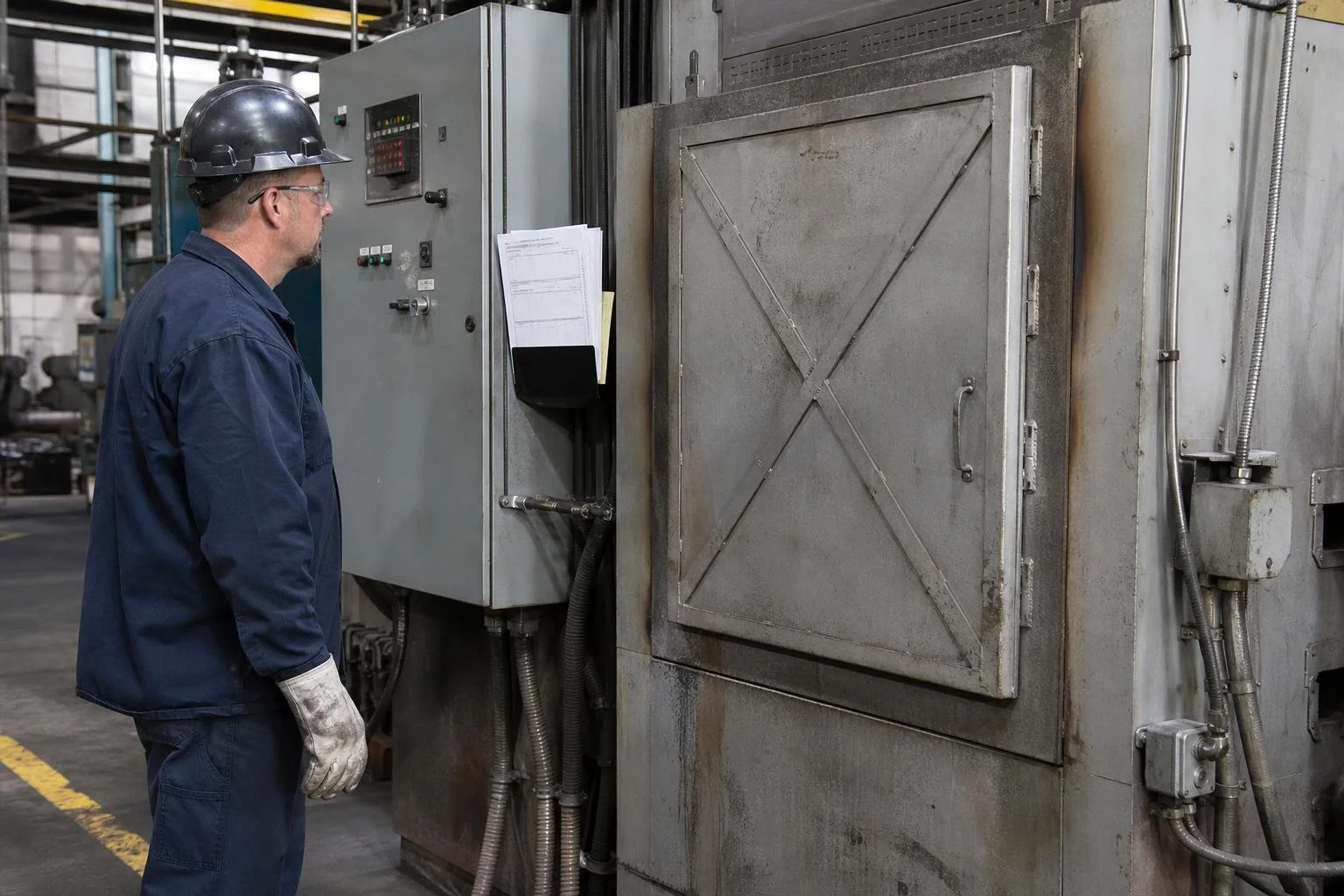
In the factory example, furnace startup and preparation for shipping raised basic consistency questions. Would different employees describe the same startup process, and what confirmed that everything necessary had happened before a shipment left?
Turn exceptions into system improvements
An immediate solution gets work moving again. A system solution also asks what should prevent the problem from recurring and what employees should do if it happens anyway.
That second question matters because some exceptions will remain unavoidable. A documented response gives the team something to consult instead of making another urgent call to the owner.
Define the repeatable process.
Prepare people to run it.
Document responses to recurring exceptions.
Together, these steps move reliability into the business's operating structure. Systems support the work, people run the systems, and the owner leads those people.
Delegate Decisions, Not Just Tasks
Assigning tasks does not necessarily reduce dependence. Meaningful delegation gives someone authority to make choices within an agreed framework, while preserving a way for the owner to review whether those choices are working.

Set a clear decision boundary
In one HVAC business, the owner was repeatedly interrupted over routine billing decisions. He responded by giving an employee authority to make certain adjustments without seeking approval each time.
The change was not simply a larger task list. It gave the employee permission to exercise judgment within a defined financial boundary, replacing repeated approvals with a clear area of authority.
Review outcomes without taking back every decision
The owner then reviewed the adjustments in one monthly meeting. Choices he might have handled differently became opportunities to improve the approach for next time rather than reasons to criticize the employee.
This preserved visibility without restoring constant interruptions. The review process supported learning while allowing the employee to continue making decisions.
Use the recovered time for important, nonurgent work
Fewer interruptions can initially leave an owner feeling less important. The adjustment is to recognize work that matters but has repeatedly lost priority because it is not urgent.
In the same HVAC business, fleet-management discussions had been deferred because the owner was too busy. Moving routine decisions away from him created room to consider broader structural changes rather than continuing to handle every small approval.
What may be decided independently?
What boundary limits that authority?
When will decisions be reviewed?
These questions make delegation concrete. The goal is not to eliminate oversight, but to replace repeated permission-seeking with defined authority and a useful review rhythm.
Protect Leadership Capacity and Long-Term Business Value
Owner dependence carries costs beyond the working day. Leadership development needs to address the owner's behavior and personal priorities as well as the business's ability to operate without daily rescue.

Recognize the personal cost of constant availability
The factory owner sought help after work's demands threatened his marriage. The operating problems were longstanding, but their personal consequences finally made change necessary.
A workload review should therefore include what the schedule prevents, not just hours worked. A trusted advisor can provide a place to acknowledge those costs and think through what needs to change.
Use self-awareness to address operational conflict
A behavioral assessment helped the factory owner recognize his own communication style. Extending that work to the team also exposed different perspectives between him and the quality-control employee.
One emphasized formal quality limits; the other emphasized functional customer acceptance. Understanding the difference did not remove every disagreement, but it gave them language to discuss the issue without treating it as a personal dispute.
Test whether the business can function during an absence
The factory owner eventually took vacations without remaining attached to his phone. He could check in with one person for an hour a week and learn what was working, what was not, and what would be done about it.
He also regained time for cycling and social activities outside work. For an owner considering an eventual sale, reduced daily dependence offers another reason to develop systems and leadership beyond the founder.
What is working?
What is not working?
What is the plan to fix it?
A focused check-in tests whether responsibility has genuinely moved into the organization. The objective is informed leadership without requiring the owner to personally manage every correction.
Conclusion
A reliable manufacturing business needs more than an owner who can solve difficult problems. It needs an operating structure that lets other people carry responsibility when that owner is unavailable.
Repeatable processes, appropriate checklists, and clear procedures establish that structure. Treating recurring exceptions as system-design questions prevents each correction from becoming another permanent demand on the owner.
Delegation then gives people room to use judgment within agreed limits. Scheduled reviews preserve visibility and learning without forcing every decision back through the same person.
The resulting leadership capacity has both business and personal significance. It creates room to consider long-term improvements while reconsidering the cost of a business that requires constant availability.
A practical starting point is one recurring interruption: assign a decision owner, an agreed boundary, and a review date. Owners seeking guidance with that transition can connect with W5 Coaching.
FAQs
What is structural trust in a manufacturing business?
Structural trust comes from reliable systems, training, procedures, and checklists rather than depending entirely on personal familiarity with particular employees.
How is delegating authority different from assigning tasks?
Assigning tasks specifies work to complete. Delegating authority also permits decisions within agreed boundaries, supported by a review process.
Can custom manufacturing work use repeatable processes?
Yes. The finished product can vary while the process used to move from requirements to completion remains consistent.
When should a business use a checklist rather than an SOP?
A checklist reminds trained employees of essential actions. An SOP provides detailed, step-by-step instructions for carrying out a process.